
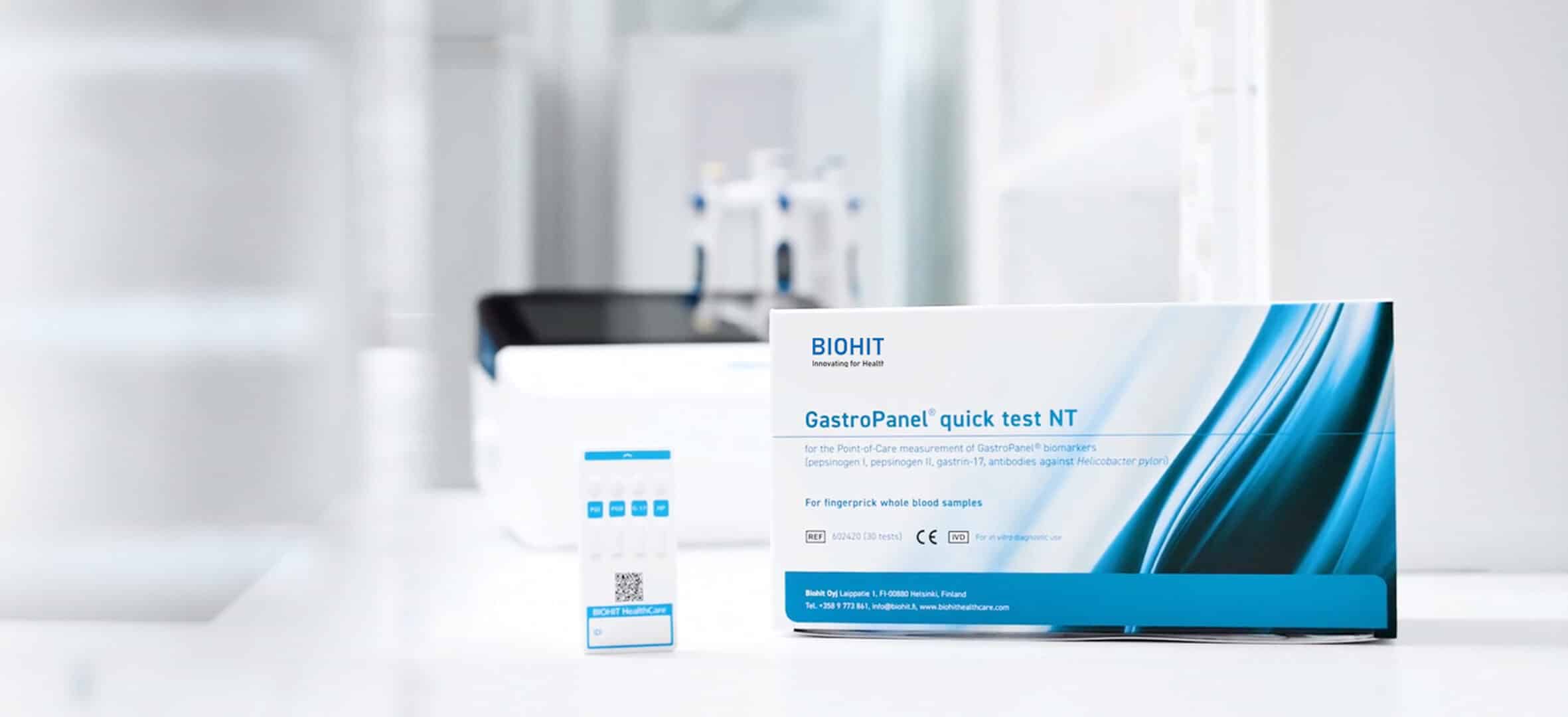
Chile adopts GastroPanel® technology in national cancer prevention strategy
Biohit’s innovations have found new success in the adoption of its biomarker-based diagnostic tools.
Chile’s Ministry of Health has now integrated a Gastric Serological Panel into its Digestive Cancer Prevention Strategy [1]. This is a nationwide initiative aimed at reducing gastric and colorectal cancer mortality through early detection.
At the core of this strategy is GastroPanel® technology, which enables non-invasive testing to assess gastric health and cancer risk. The panel measures pepsinogen I, pepsinogen II, gastrin-17, and Helicobacter pylori antibodies. It is a tool for clinicians to identify conditions such as H. pylori infection, atrophic gastritis, and gastric cancer risk without invasive gastroscopy.
“When science turns into policy, lives are saved”
“Chile’s decision shows how modern diagnostics can transform cancer prevention at a national level”, says Jussi Hahtela, CEO of Biohit.
According to the Chilean Ministry of Health, the use of the Gastric Serological Panel can reduce unnecessary endoscopies by up to two-thirds [1]. As a result, gastroscopies are reserved for those who truly benefit from them, thus allocating scarce resources more efficiently.
The program is being implemented across fifteen regional health services, supported by the country’s REDCap data platform. The Chilean model shows how integrating non-invasive biomarker tests early in the diagnostic pathway can improve risk assessment and reduce the burden on endoscopy units.
A shift toward biomarker-driven triage
Biohit’s GastroPanel® Quick Test (GPQT) is a Point-of-Care version of the classical ELISA GastroPanel. This rapid test delivers results in 20 minutes, enabling frontline clinics to test for H. pylori, Pepsinogen I & II, Gastrin-17 and assess the early risk of atrophic gastritis.
Besides this most recent development in Chile, GastroPanel is demonstrating clinical value in other settings as well.
Earlier in 2025, the GastroPanel® Quick Test was clinically validated in a high-risk population in India [2, 3]. This is the first clinical validation study of GPQT in a cohort of gastroscopy referral patients in a high-risk population in India. The study shows that the diagnostic accuracy of the GastroPanel® quick test is comparable to the GastroPanel ELISA test. Furthermore, the results are very consistent with biopsy results taken during endoscopy.
”Being closely concordant with the gastroscopic biopsy results, GPQT offers an outstanding new tool for the POC diagnosis of GC risk conditions (AG and Hp-infection) in a single clinical appointment”, Hahtela says.
Besides the tool’s technical excellence, adopting GPQT for patients at high-risk for gastric cancer can reduce costs by limiting unnecessary clinical appointments, speeding up access to clinical triage and helping allocate limited endoscopy resources to those who need it.
Furthermore, another clinical study in the UK showed how clinicians can use GastroPanel to distinguish between patients who require endoscopic evaluation and those who can be safely monitored or treated conservatively [4].
Read more: How does GastroPanel® perform as a triage system for gastric cancer risk assessment?
“Chile’s model is a proof of concept for the world“
Chile’s adoption of the Gastric Serological Panel showcases how evidence-based diagnostics can strengthen national cancer prevention frameworks.
“When healthcare policy embraces validated diagnostics, the result is both better outcomes and more sustainable systems”, Biohit’s Jussi Hahtela adds.
As more countries seek cost-effective ways to manage cancer risk and reduce the burden on endoscopy services, GastroPanel® offers a potential solution that can benefit both patients and healthcare systems.
To provide further insight into the real-world impact of this strategy, we invite you to watch the following interview with a Chilean medical technologist from Gebrax Chile. In the video, the expert discusses the role of GastroPanel in the country’s national cancer prevention framework, highlighting its implementation within public healthcare and sharing practical experiences from the frontline. This discussion offers valuable perspectives on how evidence-based diagnostics like GastroPanel are helping to shape more effective and sustainable approaches to gastric cancer risk assessment in Chile.
References:
- Chile’s national cancer prevention strategy brings GastroPanel® technology into public healthcare. https://investors.biohithealthcare.com/en/releases?publicationId=fc8e9de5-fd44-44c4-980b-c2515b71f9b3
- The new GastroPanel® Quick Test of Biohit Oyj clinically validated in a high-risk population in India. https://www.biohithealthcare.com/en/the-new-gastropanel-quick-test-of-biohit-oyj-clinically-validated-in-a-high-risk-population-in-india/
- Chabbra, M., Singh, G., Joshi, A., Kolatkar, A., Holopainen, H., Hendolin, P., Syrjänen, K. Point-of-Care Diagnosis of Atrophic Gastritis by Serological Biomarker Test (GastroPanel® quick test) in Gastroscopy Referral Patients in India. J Clin Med. 14, 787-805, 2025.
- Papadia C, Marelli L, Wood E, et al. Can GastroPanel be used as a triage tool to select patients with advanced atrophic gastritis for gastroscopy? A prospective clinical validation study. BMJ Open Gastroenterol. 2025;12:e001559. doi:10.1136/bmjgast-2024-0